
Bunker (Reino Unido, Estados Unidos, 2026)
Título Original: Bunker
Direção: Florian Zeller
Roteiro: Florian Zeller
Elenco principal: Javier Bardem, Penélope Cruz, Stephen Graham, Paul Dano, Patrick Schwarzenegger, Chloe Conh, Leah Conh, Mark Gatiss
Duração: 126 minutos (2h 6min)
É interessante quando o trabalho de começar a pensar em um filme praticamente se inicia com uma ideia e um casting, e isso é exatamente o que aconteceu com Bunker, a nova obra do celebrado diretor Florian Zeller. Após o sucesso de Meu Pai (2020) e uma recepção menos calorosa de Um Filho (2022), sua nova obra traz um casal em crise conjugal para o centro das telas.
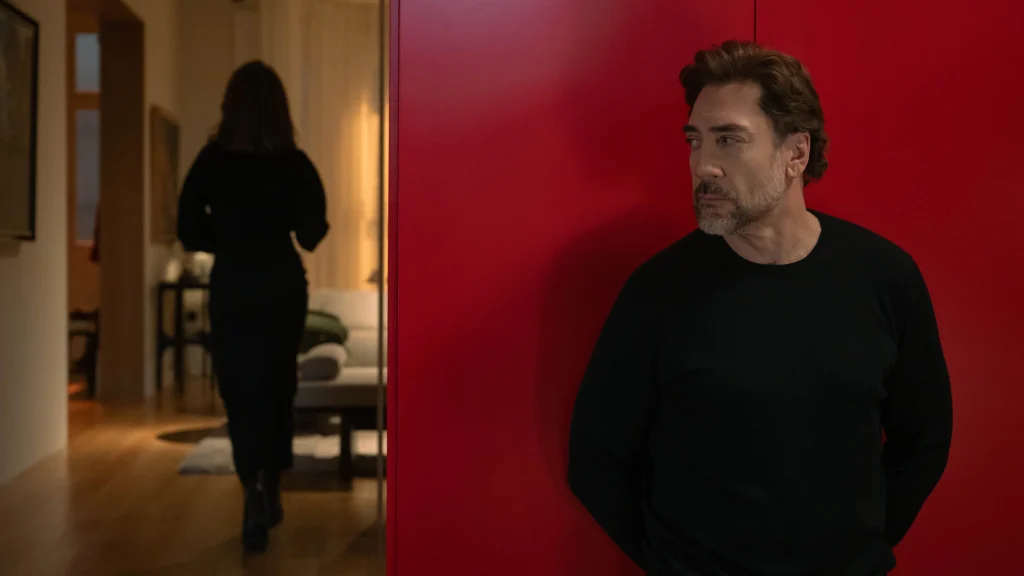
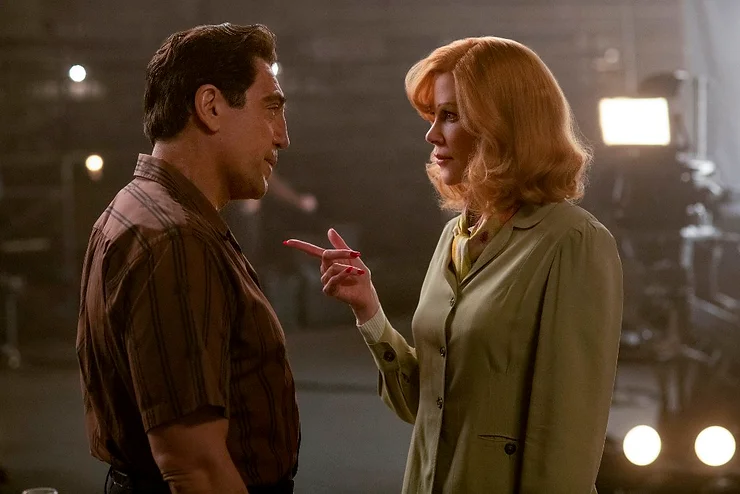
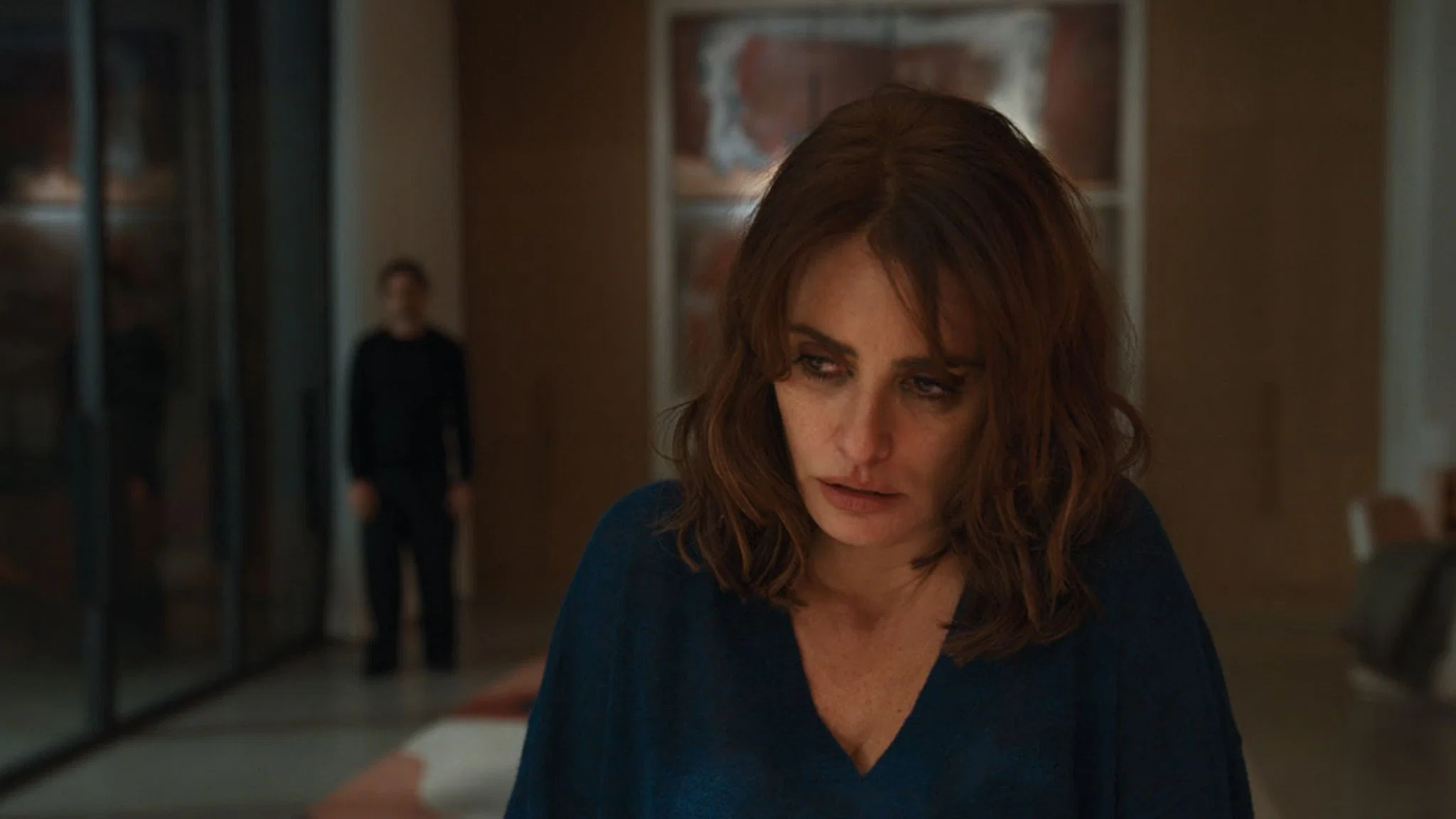
Miguel e Sofia são vividos pelo casal real Javier Bardem e Penélope Cruz, que começam o filme parecendo um casal ideal e vão tendo uma desconstrução dessa relação a partir de alguns pontos de crise. Miguel é um arquiteto renomado e premiado, enquanto Sofia é uma agente literária não tão satisfeita com seu trabalho por ainda ser vista como uma estrangeira, dado que ambos são espanhóis e moram em Londres. Um elemento de crise aparece em cada um desses trabalhos: para Miguel, um milionário pede a sua assessoria para a construção de um bunker; enquanto para Sofia, um autor americano surge e acaba ocupando boa parte de seu tempo e criando conversas bastante profundas que a colocam em conflito interno. Junto com isso, a casa vizinha à deles começa a destruir o muro entre ambos os lares, gerando um conflito sobre a sua privacidade.
Apenas por essa introdução sobre a narrativa já é perceptível que existem muitos elementos sendo colocados em quadro, e que tentam funcionar tanto de uma forma mais direta quanto de maneira metafórica, trazendo à tela questões bastante importantes para a contemporaneidade, como as fortunas vindas de big techs, o senso de deslocamento de não viver em seu país e até a privacidade das pessoas dentro de suas próprias casas. Justamente por essa quantidade enorme de assuntos levantados e a impossibilidade de tratar de todos ao mesmo tempo, tudo parece ser tratado com um forte senso de urgência, mas sem conseguir discutir nada a fundo.
Nada ultrapassa essa camada rasa de compreensão, mas trilha sonora, fotografia e direção de arte tentam compensar essa situação tornando o filme um acontecimento estético. Desde as formas arquitetônicas apresentadas, passando pelo belíssimo vestido vermelho de Penélope Cruz e o consequente reaparecimento da cor ao longo da trama, e até o som da parede sendo destruída fora de quadro, percebe-se que a obra se dá uma grande importância. Claro, não há problemas entre descompasso entre forma e conteúdo em uma obra cinematográfica, desde que isso seja realizado com um propósito, mas aqui tem-se a sensação de que é apenas uma espécie de maquiagem para um interior menos profundo.
Além disso, mesmo lidando com temas relativamente simples e de forma bastante direta, a obra ainda sente a obrigação de pegar o espectador pela mão para explicá-lo cena a cena do filme, algo que incomoda muito em relação ao seu final, principalmente. Quase que desafiando a sua capacidade intelectual, ele precisa colocar uma metáfora igualmente rasa para garantir que a sua mensagem sobre o que há de errado com a humanidade seja compreendida.
É decepcionante ver um cineasta que conseguiu trazer algumas ansiedades contemporâneas de maneira tão sensível à tela em seus últimos longa-metragens apresentando algo que parece não compreender a força do audiovisual. Seguimos na esperança de que seus novos projetos retomem o caminho que ele havia seguido até então.
Bunker (UK, USA, 2026)
Original Title: Bunker
Director: Florian Zeller
Writer: Florian Zeller
Cast: Javier Bardem, Penélope Cruz, Stephen Graham, Paul Dano, Patrick Schwarzenegger, Chloe Conh, Leah Conh, Mark Gatiss
Runtime: 126 minutes (2h 6min)
It is interesting when the process of developing a film begins essentially with an idea and a cast; this is precisely what happened with Bunker, the new work by acclaimed director Florian Zeller. Following the success of The Father (2020) and the less enthusiastic reception of The Son (2022), his latest film places a couple facing marital crisis at the center of the story.
Miguel and Sofia are portrayed by real-life couple Javier Bardem and Penélope Cruz; the film opens with them appearing to be an ideal couple, only to show the unraveling of their relationship as they face various points of crisis. Miguel is a renowned, award-winning architect, while Sofia is a literary agent dissatisfied with her work — partly because she is still perceived as a foreigner, given that both are Spanish and live in London. A crisis point arises in each of their professional lives: for Miguel, a millionaire seeks his services to build a bunker; meanwhile, for Sofia, an American author enters the picture, taking up much of her time and sparking deep conversations that trigger an internal conflict. In addition to this, construction work at the house next door begins to tear down the wall separating the two homes, creating a conflict regarding their privacy.
Even from this narrative introduction, it is evident that numerous elements are being introduced, attempting to function on both literal and metaphorical levels, to bring pressing contemporary issues to the screen: the vast fortunes amassed by Big Tech, the sense of displacement inherent in living abroad, and even the sanctity of privacy within one’s own home. And precisely because of the sheer volume of topics raised, and the impossibility of addressing them all simultaneously, everything is treated with a sense of urgency, yet nothing is explored in depth.
Nothing rises above this superficial level of understanding; however, the soundtrack, cinematography, and art direction attempt to compensate by turning the film into an aesthetic event. From the architectural forms on display and Penélope Cruz’s stunning red dress, along with the color’s recurring presence throughout the plot, to the sound of a wall being demolished off-screen, it is clear the film takes itself very seriously. Of course, a disconnect between form and content is not inherently problematic in cinema, provided it serves a purpose; here, however, it feels like mere window dressing for a lack of substance beneath the surface.
Furthermore, despite dealing with relatively simple themes in a straightforward manner, the film feels compelled to hold the viewer’s hand and explain every scene — a tendency that becomes particularly grating toward the end. Almost as if challenging the audience’s intelligence, it resorts to an equally shallow metaphor to ensure its message about humanity’s flaws is fully grasped.
It is disappointing to see a filmmaker who so sensitively brought contemporary anxieties to the screen in his previous features, present a work that seems to misunderstand the power of the audiovisual medium. We remain hopeful that his future projects will return to the path he had previously established.