
Butterfly Jam (EUA/Rússia, 2026)
Título Original: Butterfly Jam
Direção: Kantemir Balagov
Roteiro: Kantemir Balagov e Marina Stepnova
Elenco principal: Talha Akdogan, Barry Keoghan, Riley Keough e Harry Melling
Duração: 118 minutos
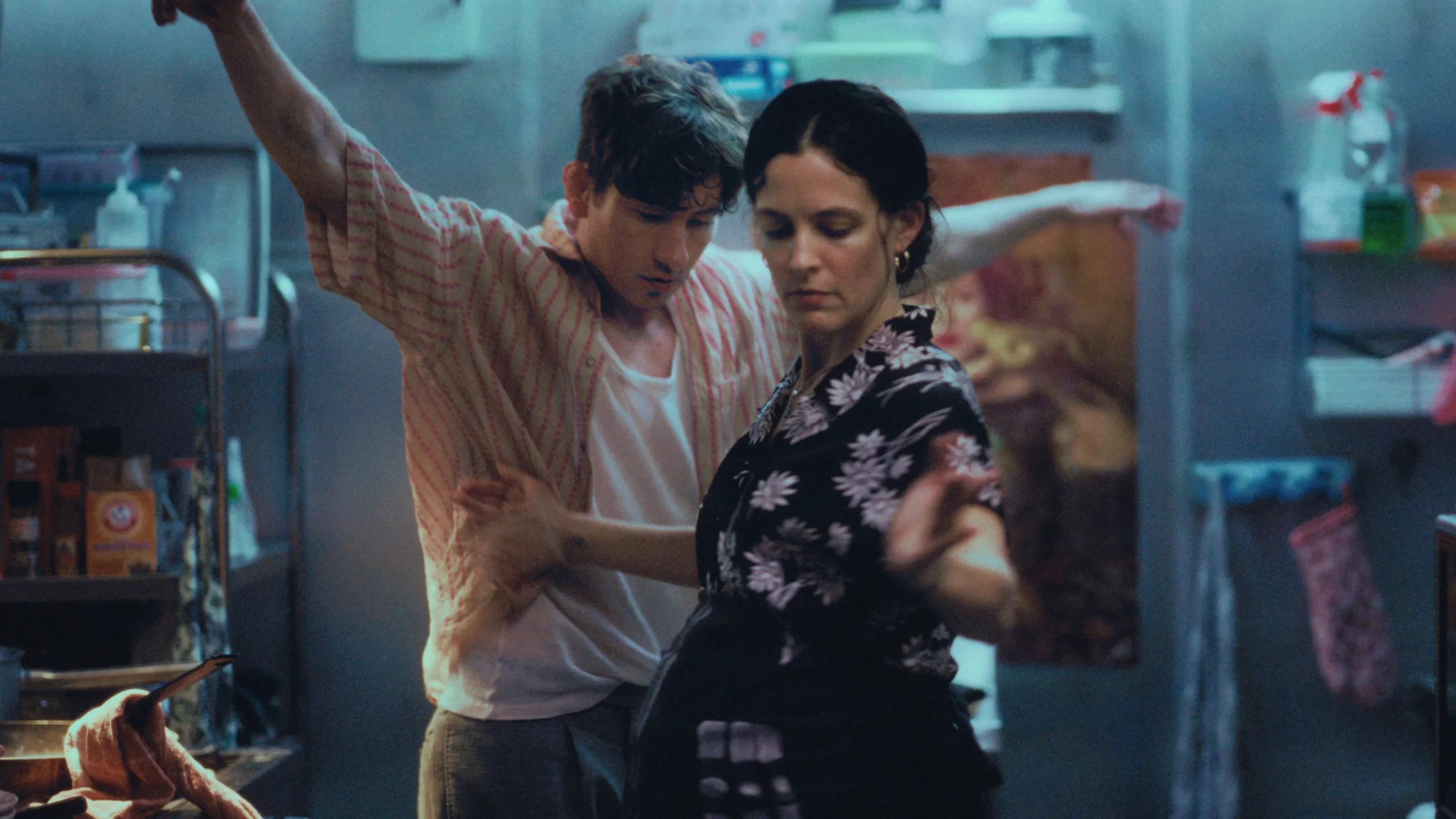
Logo no início de Butterfly Jam, em um encontro entre amigos, o personagem Aziz (Barry Keoghan) confirma que ele é capaz de fazer geleias de qualquer coisa, inclusive de borboletas, e que essa é uma especialidade dele. Considerando que ele é cozinheiro em um restaurante familiar que tem com a irmã, até podemos nos questionar por um segundo sobre a veracidade dessa informação, mas logo um dos homens presentes brinca sobre a capacidade imaginativa de Aziz e compreendemos que é apenas uma brincadeira. Isso é, no entanto, essencial para começarmos a compreender esse personagem com valores circassianos, uma imaginação fértil e que está tentando fazer o melhor para criar o seu filho Pyteh (Talha Akdogan).
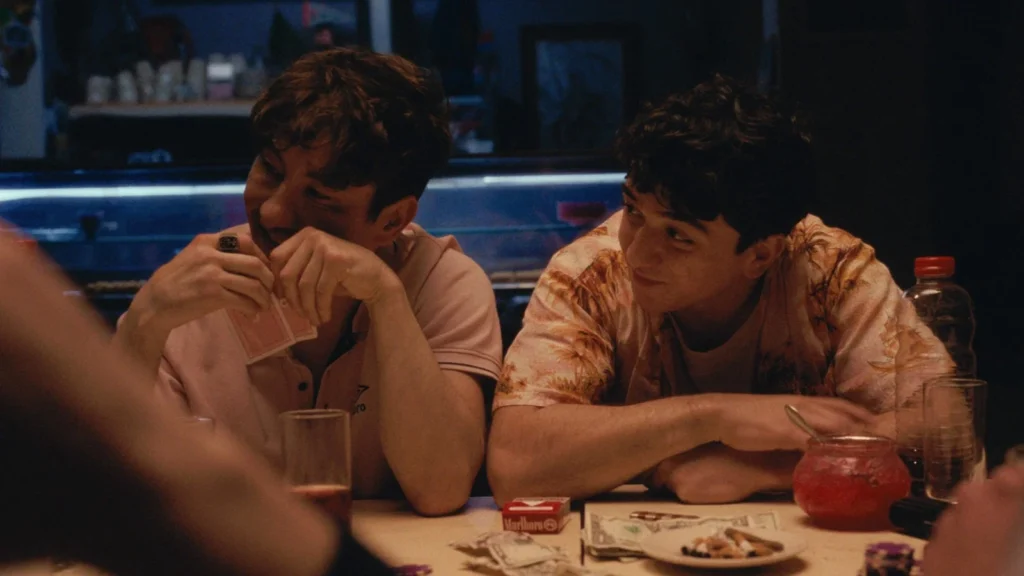
Pyteh, por sua vez, representa a geração dos filhos de imigrantes, já mais aculturados nos EUA. Focado em uma carreira esportiva, ele segue dietas e treinos específicos para tentar abocanhar uma parte do já decadente sonho americano, principalmente por compreender o esforço do seu pai para trazê-lo a uma melhor condição de vida do que no país de origem. Assim, entre tropeços e levantadas, Pyteh também vai aprendendo com o pai e com os amigos dele o que é a masculinidade e quais são os trejeitos que ela deve carregar.
Se os filmes anteriores do diretor são mais focados em uma forma um pouco mais voltada para um realismo, aqui ele se permite um maior espaço para a experimentação. Entre situações de roteiro e até modo de iluminação indireta das cenas, aqui existe uma mescla entre o cotidiano brutal e um pequeno espaço para se sonhar. Em uma cena, por exemplo, pai e filho saem por uma rua acionando os alarmes de todos os carros, e ainda que isso não tenha nenhum sentido muito direto dentro do roteiro além da catarse entre ambos enquanto frustrados, cria-se uma imagem que certamente fica impressa na mente do espectador.
Ainda que se fale de um menor realismo, é importante dizer que o filme ainda se mostra brutalmente violento, até por conta da temática do patriarcalismo que ele aborda. Entre questões como perpetuação de violências, incompreensão entre gerações e, por fim, a questão do filho que aos poucos vai se tornando o próprio pai, há bastante espaço para discutir todos os níveis dessa brutalidade das relações entre homens e como eles aprendem também a se relacionar com as mulheres. Neste sentido, é recomendada cautela para quem assiste, pois algumas cenas são bastante pesadas.
Criam-se personagens excelentes, mas por vezes parece que o filme não sabe muito bem até onde ir com a sua história, criando situações e elementos que aos poucos vão dispersando a atenção de quem assiste. Acabamos com a impressão de assistir algo grandioso, mas que nem sempre conseguimos acompanhar por conta de uma fragilidade entre as relações entre as cenas. Ficamos com a impressão de que temos ótimas atuações e uma excelente intenção, mas que o projeto tão caro ao diretor, que o escreveu logo que emigrou da Rússia para os EUA, acaba se perdendo um tanto na tradução de seus conceitos para a tela.
In English, translated by Renata Torres:
Butterfly Jam (USA/Russia, 2026)
Original Title: Butterfly Jam
Director: Kantemir Balagov
Screenplay: Kantemir Balagov and Marina Stepnova
Main Cast: Talha Akdogan, Barry Keoghan, Riley Keough, and Harry Melling
Running Time: 118 minutes
Right at the beginning of Butterfly Jam, during a gathering of friends, the character Aziz (Barry Keoghan) confirms that he can make jam out of anything, including butterflies, and that this is his specialty. Considering that he is a cook in a family restaurant he owns with his sister, we might question the veracity of this information for a second, but soon one of the men presents jokes about Aziz’s imaginative capacity, and we understand that it’s just a joke. This, however, is essential for us to begin to understand this character with Circassian values, a fertile imagination, and who is trying his best to raise his son Pyteh (Talha Akdogan).
Pyteh, in turn, represents the generation of immigrant children, already more acculturated in the USA. Focused on a sports career, he follows specific diets and training to try to seize a piece of the already decadent American dream, mainly because he understands his father’s effort to bring him to a better life than in his country of origin. Thus, between stumbles and recoveries, Pyteh also learns from his father and his friends what masculinity is and what mannerisms it should carry.
If the director’s previous films are more focused on a slightly more realistic approach, here he allows himself more room for experimentation. Between script situations and even the indirect lighting of the scenes, there is a mix between the brutal everyday life and a small space for dreaming. In one scene, for example, father and son drive down a street setting off all the car alarms, and although this doesn’t have any direct meaning within the script beyond the catharsis between them as they are frustrated, it creates an image that certainly remains imprinted in the viewer’s mind.
Even though it’s said to be less realistic, it’s important to say that the film is still brutally violent, partly due to the patriarchal theme it addresses. Between issues such as the perpetuation of violence, generational misunderstanding, and finally, the issue of the son gradually becoming his own father, there is ample room to discuss all levels of this brutality in relationships between men and how they also learn to relate to women. In this sense, caution is recommended for viewers, as some scenes are quite heavy.
Excellent characters are created, but at times it seems the film doesn’t quite know how far to go with its story, creating situations and elements that gradually lose the viewer’s attention. We end up with the impression of watching something grand, but one that we can’t always follow due to a fragility in the relationships between the scenes. We are left with the impression that we have great performances and excellent intentions, but that the project, so dear to the director, who wrote it soon after emigrating from Russia to the USA, ends up getting somewhat lost in the translation of its concepts to the screen.
Obrigada, Aline Guevara, pelo apoio! Se você quiser ver o seu nome nas próximas críticas, não esqueça que o financiamento coletivo segue aberto em https://www.kickante.com.br/financiamento-coletivo/ajude-o-no-sofa-com-gatos.